
.png)

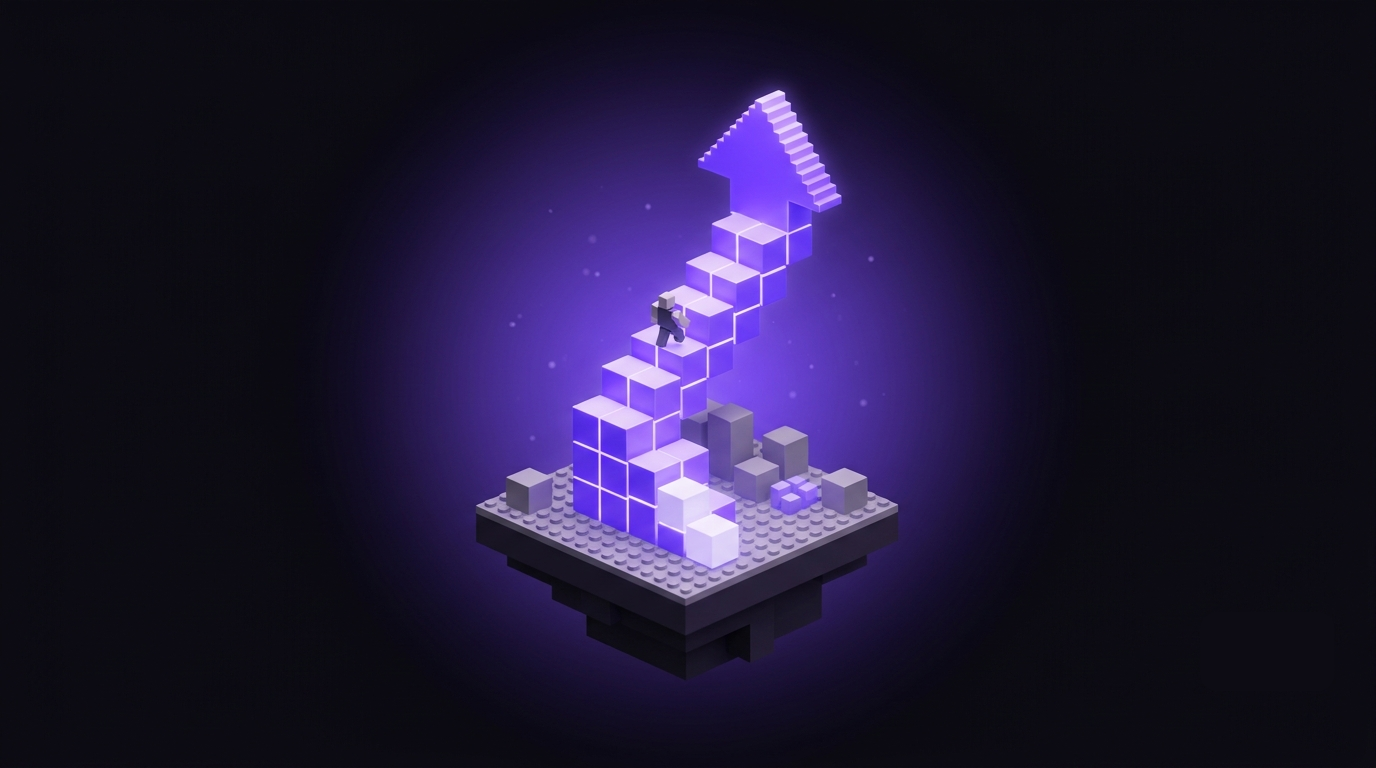
Growing a Roblox game in 2026 is a systems problem. Five systems run it: discovery, traffic, retention, monetization, and optimization, and they compound only when you treat them as one connected loop where each feeds the next. Most studios run them as separate projects, and that is why their early wins stall.
At Indigo, running these five systems as one loop took "Don't Get Crushed By 67" to 4.7M peak DAU and +220% ARPDAU in 14 days.
What actually drives Roblox growth?
Roblox growth comes from five systems working as a single loop:
- Discovery: a thumbnail and title that earn clicks in home recommendations.
- Traffic: paid ads and creator content that give the algorithm an early signal.
- Retention: a clean new-player experience and a weekly live-ops calendar.
- Monetization: a tiered product matrix that raises revenue while keeping players in.
- Optimization: continuous A/B testing on UI, progression, and pricing.
Each one feeds the next. Discovery brings players in, retention keeps them, monetization funds the next wave of traffic, and optimization sharpens every step. A thumbnail that stops converting or a campaign that runs out of budget breaks the loop, and growth flattens. Indigo has applied this model across more than 350 games, and the studios that scale treat the five as one system.
Why discovery (thumbnail + QPTR) comes first
Discovery is the front door. If players scroll past your thumbnail, nothing downstream gets a chance to work. The metric that governs it is QPTR, or qualified play-through rate: the share of players who see your game in home recommendations and click through to play.
Roblox rewards a high QPTR with more impressions, so a small lift on the thumbnail or title compounds across millions of views. On portfolio games, Indigo has raised QPTR by 70% to 180% through thumbnail and audience work alone.
How traffic and the algorithm interact
Traffic gives the algorithm something to react to. Paid Roblox ads and creator content on YouTube and TikTok push an early wave of players. When those players convert and stay, the algorithm amplifies the game with organic home-recommendation impressions.
This is why you cannot judge traffic on its own. Buying players for a game that does not retain mostly burns budget. On "Don't Get Crushed By 67," a UGC infusion added over 20M impressions that compounded into 47M home-recommendation impressions.
The role of live-ops in retention
Retention turns a traffic spike into a business, and live-ops is how you hold it. A weekly calendar of events, limited-time items, and content updates gives players a reason to come back and signals freshness to the algorithm.
Players return for a schedule they can rely on, so a steady weekly cadence matters more than the occasional big update. Indigo runs live-ops as an always-on system, which has added as much as 30% to D1 retention on portfolio games.
Monetization without killing retention
Good monetization raises ARPDAU (average revenue per daily active user) while keeping players in the game. The lever is a structured product matrix across price tiers: low-cost entry items, mid-tier upgrades, and premium or limited products, so every type of player has something worth buying.
Price too aggressively on day one and you shrink the paying base before it forms, so sequence matters. Indigo's monetization redesigns have produced +120% to +1038% PCR and up to +220% ARPDAU on portfolio games.
How optimization keeps the loop honest
Optimization is the loop's feedback system. Continuous A/B testing on UI, progression, and pricing shows which changes actually moved a metric and which only felt productive. That evidence keeps the other four systems sharp as the game scales.
Common growth mistakes
The most common mistake is treating discovery, traffic, retention, and monetization as separate projects instead of one loop. The second is scaling ad spend before QPTR and D1 retention are fixed, which pours more players into a leaky funnel.
Many studios also monetize too early and cap their own audience before it grows. The fix is the same every time: find the real constraint first, usually discovery or retention, and resolve it before you spend more.
Grow your Roblox game with Indigo
Want a clear read on what's holding your game back? Send your game link and Indigo will review your DAU, retention, and monetization potential, usually within 48 hours. Get a free review →